Editorial
Dear HLT Readers,
Welcome to the November issue of HLT. First, let me tell you about the Pilgrims Teacher Training Conference Online which was a great success. You can get Glimpses from the Pilgrims Conference 10th-11th October 2026: Some Photos and Some Voices in one of the articles in HLT. More in the February issue of HLT and forthcoming issues of the TTJ. Speaking of TTJ, you can access and read the new October 2026 issue of the journal here.
There is more Pilgrims News November 2027 from Phil Dexter, Pilgrims Teacher Training coordinator and editor the Teacher Trainer Journal. As you will see, there is a lot in the pipeline, so make sure you are up to date with the developments including courses in Segovia and hopefully in Edinburgh in 2026.
When it comes to memories from the summer of 2026, there is a lot of good feedback from our courses in Segovia and also from Pilgrims English language residential summer camp for children and teenagers on the historic campus of Harrow School in London. In Hope, Healing and Humanity; Celebrating Ukrainian Identity at Pilgrims at Harrow on the Hill Leah Luke, Course Director Harrow, Principal of Pilgrims describes some of the most memorable and poignant moments of the stay of Ukrainian children at the camp.
Two of our regular contributors are running two important events. The first is : The MATSDA Materials Writing Competition 2026 which is accompanied in this issue of HLT by an article from one of the founding fathers of MATSDA Brian Tomlinson: Text-Driven Approaches to Task-Based Language Teaching.
The second event is Colloquium 2026, 45th Annual International TESOL France focusing on the following theme: More than a Teacher: The Expansion of Skill Sets of the 21st-century Language Educator. The Teaching Times – the Newsletter published by TESOL France is sharing with HLT readers the following text Decoloniality: More Than a Buzzword in Language Education? Grappling with ‘decoloniality’ and ‘decolonising’? by Kashmir Kaur who spoke at TESOL France November 2025.

Other articles from our regular contributors include: First Days, Strong Roots: Before the Learning Begins by Effie Kyrikaki (EMBR.ACE- NeuroCoaching in ELT), How Much Do You Know About Human Trafficking and Modern Slavery?, TEST YOURSELF! by Judy Boyle (No Project), Judo - No Wrestling Involved. Defusing Tricky Situations by Using Empathy by Nick Michelioudakis (Psychology and ELT), Some Structures for Stimulating Writing by Alan Maley, A Different Poem: Who Are You by Andrew Wright, and Teaching Grammar Through Story by Jamie Keddie ( The Creativity Group), and The Eco Chapter by Marla Lise, and Fostering Social Engagement in SLA with Oral Histories: Practical Guidance for Teachers and Teacher Trainers by Brent Jones (The Eco Issues team).
There is also something seasonal: Autumn Haikus by Alan Maley, Christmas through Art with a Bit of Humour: Artists’ Christmas Trees by Hania Kryszewska, and The Festive Season in the English Classroom: Holiday Food as a Gateway to Language Learning by Joanna Patyk-Taous.
When it comes to other articles in this issue there is an interesting opposition, in fact and ongoing one – AI versus Humanism. In this issue the former is represented by Exploring Secondary English Teachers’ Choices of AI Tools for Teaching Reading to High Schoolers and Their Challenges by Narendra Setia Herawarman, Listyani Listyani and Yustinus Calvin Gai Mali, the latter by Supporting Learners in Giving Positive and Constructive Feedback by Mikiko Kawano, Silence in Education by Daniel Costa. Silence is such an interesting area in education and humanism that we hope to get reviews of books of these two books soon. Perhaps it will be you?
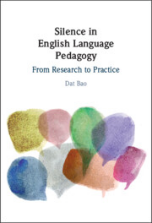
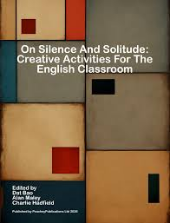
You can find more on Humanism for teachers in The Educator's Brain: More Than Just a Lesson Plan by Matthieu Silbermann, The Trust Gap in Coaching by Rachael Roberts, and Lesson Observation, Evaluation & Post-lesson Feedback for Teacher Development by Harisimran Singh.
The lesson ideas in this issue contain some ideas for YL classroom: Empowering Students in Their Learning Journey with the “Buddies System” by Nina Lauder and Cristina Quincy, and Making Reading Fun and Easy: 6 Classroom Reading Strategies You Can Count On by Saman Hassan. Two other articles look at ways of harnessing some forms of popular entertainment for the purpose of language learning: Virtual Tours in English Lessons: Connecting Language and Culture by Mariya Shramenko, and Unlocking Language Learning Through Escape Rooms: Innovative Pedagogy in Practice at The Courtauld Gallery by Sarah Amadio France, Angélique Arts, Eloi Dotto, and Abraham Hernandez Cubo. When it comes to producing teaching materials, there are three texts: Visual Impact in Teaching Materials by John Hughes, From Swift to Shift: Turning Lyric Videos into Elegant ELT Materials by Puvana Gnanasagaran, and The Use of Audio Podcasts in EFL Lessons by Juan C. Domínguez López, Alina González Hourruitiner, and Arelis Tamayo Verdecia.
There are many poems in this issue. There are the ones in the C Group section, Autumn Haikus by Alan Maley, Three Poems by Waheeda Yasin, and lessons based around the author’s own poems in Poetry in the Classroom by John Liddy.
When in comes to the Publications section, we have got two approaches – reviews and insight into the writing and publishing process: the latter in From Bright Idea to Book: Why Write a Book? by Briony Beaven, the former represented by Project-based learning: Cultivating creativity in the language classroom reviewed by Alan Maley, New Titles from Crown House and a review of a new publishing initiative online jam packed with teaching materials: Introducing TeachAnyClass.org reviewed by Chris Sowton.
Finally, note our new partners here.
Enjoy the November issue of HLT
Hanna (Hania) Kryszewska
HLT Editor
Email: hania.kryszewska@pilgrimsteachertraining.eu